
THE REOPENED INQUEST INTO THE DEATH OF MATTHWES ”MOJO” MABELANE: JOHANNESBURG HIGH COURT 49 YEARS AFTER HIS DEATH IN DETENTION
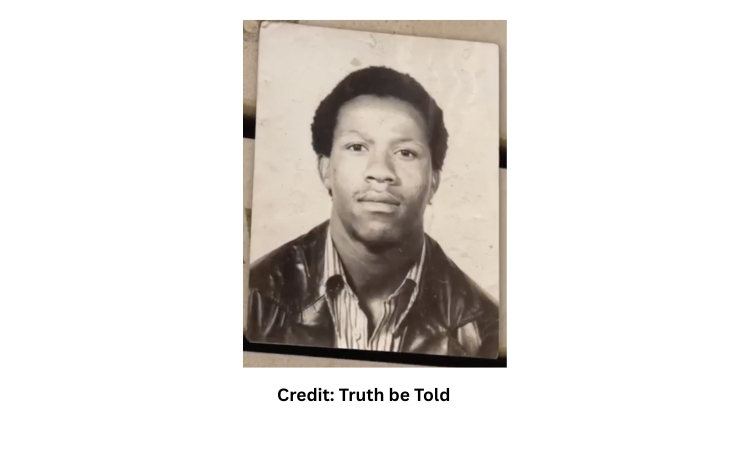

The reopened inquest into the death of anti-apartheid activist Matthews “Mojo” Mabelane will take place from 1 June 2026 to 12 June 2026 at the Johannesburg High Court, nearly five decades after his death in police detention at the former John Vorster Square police station.
Matthews Mabelane, a member of the Soweto Students Representative Council (SSRC), died on 15 February 1977, allegedly after falling from the 10th floor of John Vorster Square while detained under section 6(1) of the Terrorism Act. Security Branch alleged that Matthews attempted to escape during an interrogation by climbing out of a window before losing his balance and falling. An inquest held in 1977 accepted the police version of events and found that Matthews had died accidentally. The family was not afforded an opportunity to present evidence, and no one was held accountable for his death.
When the family later collected Matthews’ belongings, they discovered a handwritten message hidden in the lining of his trousers indicating that he feared the police were planning to kill him.
Matthews’ father, the late Reverend Phillip Mabelane, later testified before the Truth and Reconciliation Commission (TRC) in the hope that the truth surrounding his son’s death would emerge. The TRC ultimately held the former apartheid state responsible for Matthews’ death in detention. None of the implicated police officers applied for amnesty.
On 1 August 2024, the family’s legal team from Bowmans, acting pro bono, submitted representations to the National Prosecuting Authority seeking the reopening of the inquest, supported by expert forensic reports challenging the police version of events. In February 2025, the Minister of Justice formally authorised the reopening of the inquest.
Justice has come too late for Matthews’ mother, who passed away in 2001, his father, who passed away in 2017, and his older brother Lasch, who passed away in 2020. Nonetheless, the Mabelane family welcomes the long-awaited reopening of the inquest and hopes that the proceedings will finally uncover the truth surrounding Matthews Mabelane’s death, provide accountability, and bring long-overdue closure to a family that has pursued justice for nearly five decades.
Media Contacts:
Foundation for Human Rights: Jessie Waldman, jwaldman@fhr.org.za/ +27 78 644 8258
Background:
Matthews “Mojo” Mabelane was born in 1954 and grew up in Meadowlands, Soweto, after his family was forcibly removed from Sophiatown under the Natives Resettlement Act. A student at Madibane High School in Diepkloof, Matthews became politically active during the 1976 Soweto Uprisings and joined the Soweto Students Representative Council (SSRC), which organised resistance against the apartheid regime’s Bantu Education system and the imposition of Afrikaans as a compulsory medium of instruction.
Following the Soweto Uprisings and the state crackdown on student activists, Matthews went into hiding before joining uMkhonto weSizwe (MK), the armed wing of the ANC, and travelling to Botswana for military training.
On 21 January 1977, Matthews was arrested near Zeerust while attempting to re-enter South Africa. After several unaccounted days, he was booked into John Vorster Square police station on 27 January 1977. He was never charged with any offence.
The death of Matthews Mabelane is one of many unresolved apartheid-era deaths in detention linked to John Vorster Square, which became synonymous with torture, abuse, and the deaths of anti-apartheid activists in police custody. The reopening of the inquest represents a significant step in the Mabelane family’s decades-long pursuit of truth, justice, and accountability.
SUPPLIED: Jessie Waldman, Senior Legal Coordinator, TRC Programme
jwaldman@fhr.org.za